
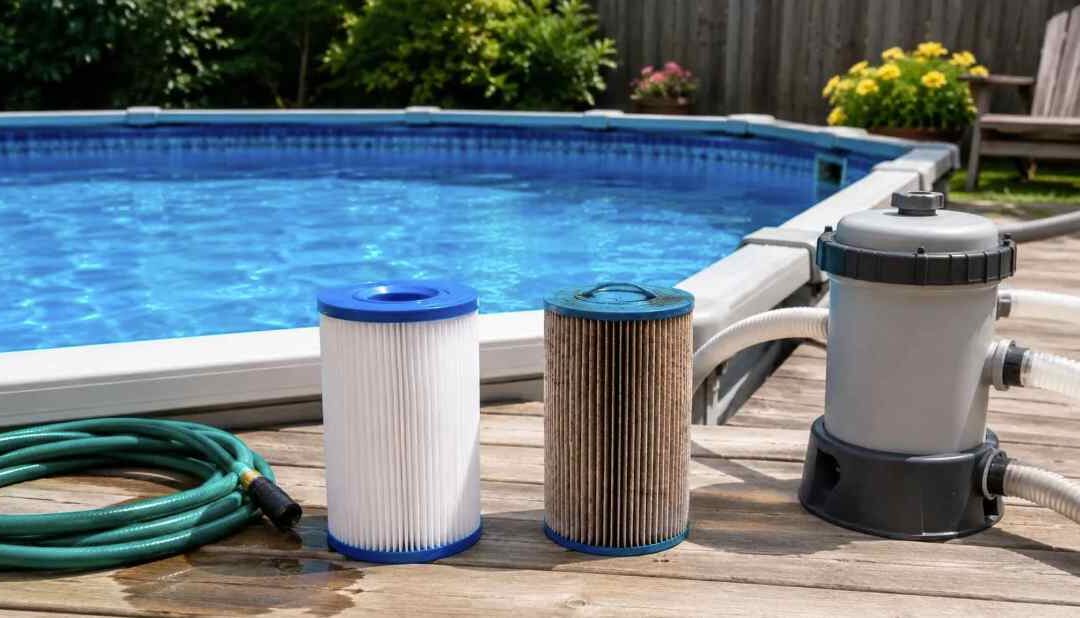
You jump into your pool expecting clear water, but instead you see cloudy, hazy water. Your chemical levels seem fine, yet the pool still smells strange and feels gritty. The real problem is usually not your chemicals. It’s your pool filter system.
A pool filter system is the part of your pool that cleans the water. It pulls water through a filter, such as sand, a cartridge, or diatomaceous earth (DE), to catch dirt, oils, and small particles. Then it sends clean water back into the pool. If this system is too small, clogged, or not maintained well, your water will stay dirty no matter how much chlorine you add.
Why Does Filtration Matter So Much?
Filtration problems are more serious than they look. Public health inspections of pools often find safety violations, and many pools get shut down because water was not filtered or treated properly.
In my experience, most pool owners think a dirty pool means a chemical problem. The mistake I see most often is people adding more chlorine instead of checking if the filter is actually working and catching dirt.
What Are the Different Types of Pool Filters?
-
Sand Filters
These are simple, affordable, and popular for larger pools. They use fine sand to trap dirt and need regular backwashing to clean out buildup.
-
Cartridge Filters
These use a paper like material to trap smaller particles. They use less water than sand filters and need less frequent cleaning, usually every few weeks.
-
DE Filters
These give the clearest water because they trap even the tiniest particles. They need more careful cleaning and a bit more skill to maintain.
How Do You Know Your Filter Is Not Working Well?
Watch for these warning signs:
- The pressure gauge reading is much higher than normal
- Water stays cloudy even when chemicals are balanced
- Water flow from the jets feels weak
- You see dirt or debris settling at the bottom of the pool
A clogged filter is one of the most common and easiest problems to fix if caught early.
What Actually Keeps a Filter System Working Right?
Here is what actually works, based on real experience:
- Backwash sand filters once a week during swim season
- Clean cartridge filters every four to six weeks
- Run your pump eight to twelve hours a day, even when no one is swimming
- Check your pressure gauge often so you catch clogs early
Should You Upgrade Your Filter System?
If you keep fighting algae, using too many chemicals, or your energy bill keeps rising, it may be time for an upgrade. Many pool owners now switch to variable speed pumps and better filters to save energy and get cleaner water with less effort.
Final Thoughts
Your pool filter system is not something you can ignore. It is the biggest factor in keeping your water safe and clear. Check your pressure gauge this week, clean your filter as needed, and don’t wait until the water turns cloudy to take action.
If you are not sure your system is working the way it should, get it checked by a professional before swim season gets busy. It will save you time, money, and a lot of frustration later.